

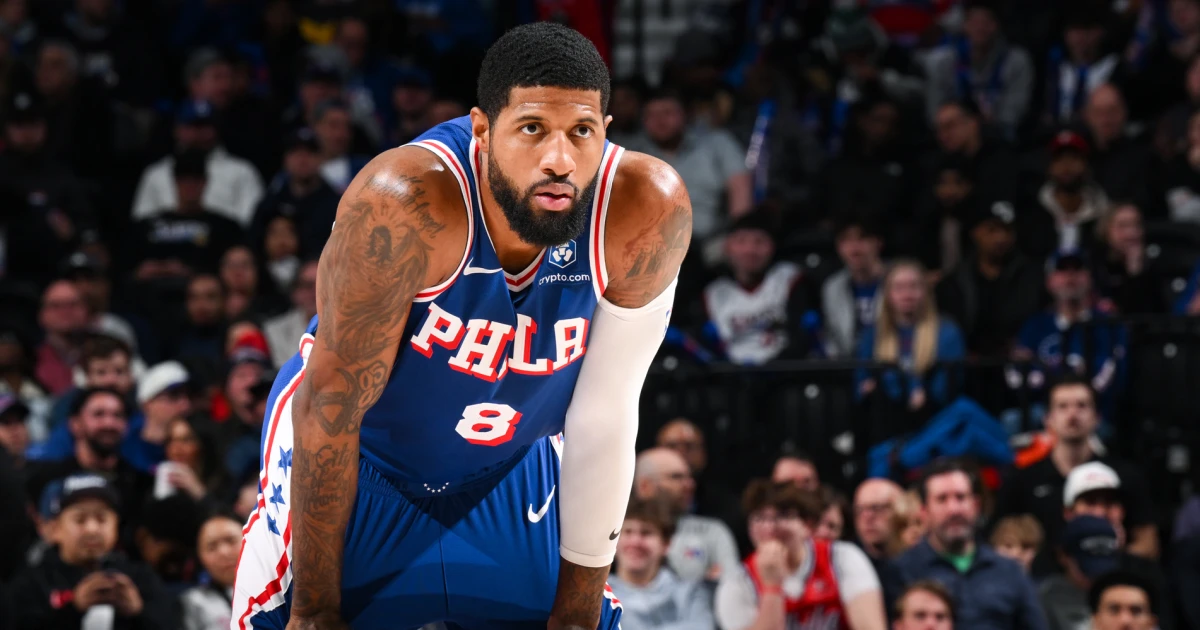
In a major NBA development that has drawn attention across the league and media, Philadelphia 76ers forward Paul George has been suspended for 25 games by the NBA for violating the league’s anti-drug program. The announcement, made on January 31, 2026, dropped a seismic storyline into the middle of the NBA season—impacting one of the league’s most recognizable stars and altering the 76ers’ outlook as they chase a playoff spot.
George’s suspension, which began when the 76ers hosted the New Orleans Pelicans, is significant not only in length but in its timing and consequences. It marks the first violation of the NBA’s anti-drug policy for George, a nine-time All-Star and one of the league’s premier wing players. The league has not publicly identified the specific substance involved.
What Led to the Suspension
The NBA announced the suspension under the terms of the collective bargaining agreement between the league and the National Basketball Players Association. A 25-game ban typically reflects a first violation of the anti-drug program, though the policy itself includes a range of prohibited substances and procedures for discipline.
In a statement to ESPN, George explained his side of the story, saying that the violation stemmed from an inadvertent mistake involving medication taken during a period of mental health treatment. He stated, “Over the past few years, I’ve discussed the importance of mental health, and in the course of recently seeking treatment for an issue of my own, I made the mistake of taking an improper medication.” George accepted responsibility and issued an apology to the organization, his teammates, and fans for his role in the situation.
His candid remarks acknowledge the sensitivity of mental health issues in professional sports and raise broader questions about how athletes navigate treatment and compliance with league policies.
Financial and Team Impacts
The suspension comes with a hefty financial consequence. George, who is in the second season of a four-year, $212 million contract with Philadelphia, will lose a substantial portion of his $51.7 million salary—estimated at roughly $11.7 million—as a result of missing 25 games. A portion of the salary forfeited by George counts as a tax credit for the Sixers, nudging the team closer to avoiding luxury tax penalties.
Philadelphia, who entered the suspension period with a 26-21 record and sixth place in the Eastern Conference, must adjust rotation and strategy in his absence. George’s average of around 16 points, 5 rebounds, and 3.7 assists per game this season represents a key scoring and defensive piece missing for nearly one-third of the campaign.
His absence leaves Joel Embiid and Tyrese Maxey to carry an even heavier load, which could affect the DraftKings basketball odds. Embiid’s injury history and Maxey’s emerging All-Star level play have kept the Sixers competitive—but losing George complicates the team’s bid for a deep postseason run. “X factors” like emerging rookie contributions and coaching adjustments now become critical to keeping the 76ers in contention.
Reaction Across the NBA World
The suspension did not go unnoticed by analysts, former players, and media voices. Hall of Famer Charles Barkley, for instance, publicly questioned the disciplinary process, suggesting that if George’s situation involved a medication linked to mental health treatment—even if improper—it might deserve special consideration. Barkley’s comments sparked discussion about how the league balances strict policy enforcement with compassion and context for player wellbeing.
The dialogue highlights a broader cultural shift in how mental health is discussed in professional sports—and the complex terrain athletes must navigate when seeking treatment while remaining compliant with strict regulatory guidelines.
What This Means for the 76ers’ Season
With George set to return around March 25, when Philadelphia hosts the Chicago Bulls, the timing leaves him available for only the final 10 games of the regular season and any postseason action. That compressed window raises strategic questions about how he will be reintegrated, how minutes will be managed, and whether the suspension will impact team chemistry or playoff seeding.
Coach Nick Nurse and the Sixers’ front office face the delicate task of maintaining stability while figuring out both short-term rotations and long-term health and readiness for the star forward.
In George’s absence, players like Kelly Oubre Jr. and Dominick Barlow may see expanded roles, giving younger or less experienced players opportunities to contribute. The situation also intensifies scrutiny on Embiid’s durability, Maxey’s leadership, and the team’s overall depth.
Navigating Mental Health in Professional Sports
George’s statement about mental health treatment puts an important spotlight on an issue many athletes confront. High-performance environments often come with innate psychological pressures, and navigating treatment while complying with league policies can be a balancing act.
His openness about the situation—framing it as a mistake made during legitimate treatment—adds nuance to what might otherwise be dismissed as a simple violation. It also contributes to an ongoing conversation about how leagues and players can better support mental health without compromising health protocols or regulatory frameworks.
Paul George’s 25-game suspension marks one of the NBA’s most consequential disciplinary actions this season, blending personal accountability with broader cultural themes. The 76ers now face a pivotal stretch where resilience, depth, and adaptability will define their trajectory.
George’s path back to the court comes with financial penalties, public scrutiny, and the challenge of reintegrating into a hungry contender. Whether this episode becomes a footnote or a turning point in his career depends on recovery, team cohesion, and how the NBA continues to balance policy enforcement with evolving discussions about athlete wellbeing.
One thing is clear: this suspension resonates beyond games won or lost—it touches on shifting perceptions around mental health, compliance, and personal responsibility in professional sports.
