

Every day sounds are louder than we realize in many work environments. Whether it’s the constant hum of heavy machinery, the pounding rhythm of power tools, or the intermittent blasts of construction equipment, exposure to high decibel levels can have long‑lasting effects on your hearing if left unmanaged. That’s where hearing protection comes in; it helps safeguard one of our most vital senses in settings where noise is more than just an annoyance.
In this guide, we’ll explore why ear defense gear matters, how to assess noise levels, the different types of protective gear available, and how to choose the best solution based on sound exposure and workplace conditions.
Why Hearing Protection Matters
The decibels (dB) are a measure of sound on a log scale, which indicates the intensity of a sound. Normal conversation falls between 6070 dB, with certain simple tools and machines pushing the noise well past 85 dB, which at these levels can cause damage to hearing in a short period of time.
When you have been damaged in your hearing, it is usually irreversible. Diseases such as noise-induced hearing loss (NIHL) will progress slowly and, in most cases, without any perceivable symptoms until serious degradation has taken place. Excessive exposure to dangerous noise levels may also cause tinnitus, continuous ringing or buzzing noise, which may affect sleep, concentration, and general health.
Earplugs used in combination with earmuffs are effective in high-noise levels (more than 100 dB). Studies also indicate that the cumulative effect is not a complete doubling of the noise mitigation, but both of them can contribute significant attenuation where necessary.
How to Assess Noise Levels at Work
The ear defense gear should be correctly measured by the sound environment before choosing any ear defense gear. The vast majority of safety specialists suggest ear defense gear when the average noise level is more than 85 dB. Professional noise tests or sound level meters can be used to identify the range of decibels workers are exposed to.
Noise can be:
● Continuous: Constant noise of running machines or engines.
● Intermittent: Unpredictable peaks of noise due to intermittent tools.
● Impact: Rapid and loud sounds such as blasts or hits of a hammer.
Both forms of noise would have an influence on the point at which hearing loss may be caused, as well as the ear defense gear solution that may be the most effective. The first important thing to do is to understand what is the nature of the noise in your workspace.
Types of Hearing Protection Gear
Hearing protection can be in several predominant varieties, all with varying advantages based on the noise levels, time of exposure, and personal comfort:
1. Earplugs
Earplugs are small, and they go to the ear canal, blocking sound at the source. They come in various formats:
● Foam Earplugs: Foam earplugs are compressible and expandable, which provides a high noise reduction at a low expense.
● Reusable Earplugs: Wear and tear resistant and easy to wash, good to use often.
● Moulded Earplugs: Made to fit an individual, they are comfortable and fit better.
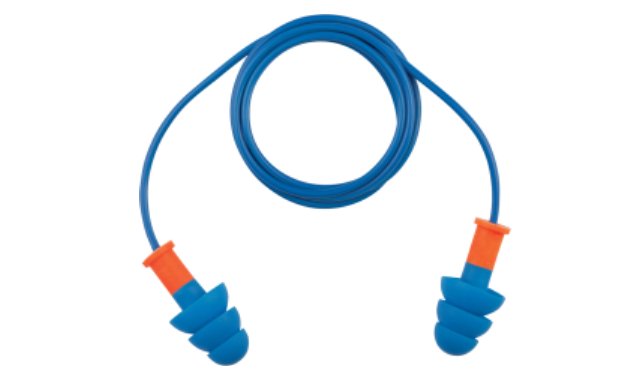
● Corded Earplugs: These aid in preventing loss, so they are easier to take care of in times when there is no noise.
Earplugs are particularly effective in hot places or where other personal protective equipment is used by the workers, since they are very lightweight and may be used with headgear or eye protection.
2. Earmuffs
Earmuffs are used to cover the whole outer ear and form some sort of a seal that limits the outside sound. They particularly work well in noisy environments in which exposure to noise is high or has a wide variation.
The advantages of the earmuffs are:
● Adjustable headband to retain the headband.
● Simplification in the removal and replacement of quiet and noisy zones.
● More noise reduction than other earplugs.
Earmuffs are good when protection requirements are not continuous or in cases where ease of use is the key.
3. Combined Use
Earplugs used in combination with earmuffs are effective in high-noise levels (more than 100 dB). Studies also indicate that the cumulative effect is not a complete doubling of the noise mitigation, but both of them can contribute significant attenuation where necessary.
As an example,a combination of over-the-ear earmuffs and high NRR earplugs has enhanced the safety of employees in very noisy environments; neither of them would have served adequate protection.
Selecting the Right Ear Defense Gear
The ear defense gear is a decision that cannot be made in a single size. On the one hand, take into account the following factors:
● Actual noise levels: Do not rely on estimates.
● Duration of exposure: The longer the shifts, the more comfortable the gear is required.
● Environment: Comfort and usability can be impacted by heat, humidity, and dust.
● Communication needs: There are ear defense devices where noise of lower levels can pass through the ear defense gear, enabling workers to hear warnings and voices.
Familiarity is important when used regularly. The high NRR of a painful product to wear will probably be eliminated, and workers will be left unprotected. Comfortable and properly fitting gear inspires compliance and improved protection with time.
Conclusion
Preservation of hearing in noisy working conditions is not a matter of choice; it is important in matters concerning health and safety in the long term. The correct hearing protection will lessen the chances of irreversible hearing loss, tinnitus, and other noise complications, and enhance comfort and concentration at work. With knowledge about the level of noise, knowing which kind of protection is needed, and knowing how to use it, workers can continue to be safe and productive in their profession.
Noise protection in the workplace should include proper ear defense gear that should be a part of the safety plan of every site. To obtain professional advice, a considerable number of protective measures, and specialized services to all safety requirements at the workplace, Delta Plus and its offerings should be considered. Their broad availability of hearing and overall safety equipment assists organizations in evaluating the risk and selecting the appropriate equipment and adopting a compliant protection program that keeps workers safe and productive.
