

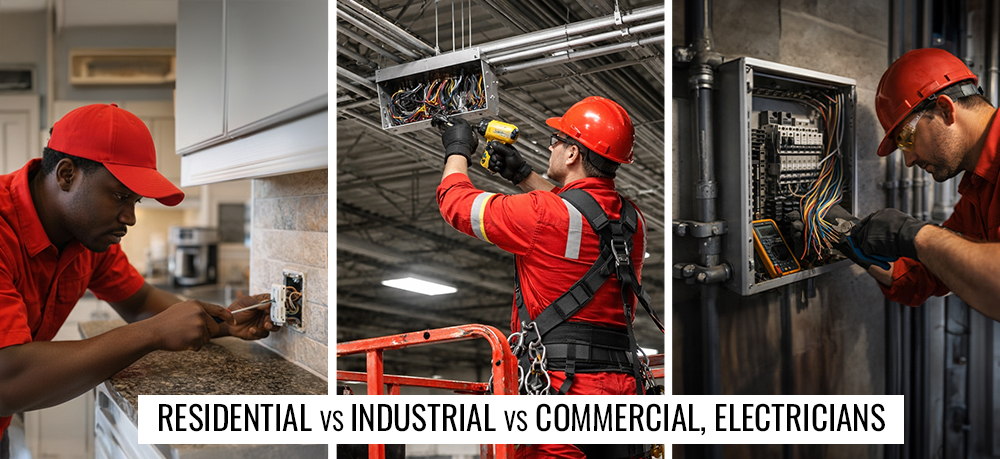
Electrical systems are essential for both homes and businesses, but the requirements and design considerations for commercial properties differ significantly from those of residential buildings. Understanding the distinctions between commercial and residential electrical systems is crucial for architects, engineers, contractors, and property owners. These differences affect everything from safety and capacity to maintenance, cost, and scalability.
While both systems serve the purpose of delivering reliable power, commercial systems are designed to support higher loads, complex equipment, and stricter safety regulations. Residential systems, on the other hand, focus on household appliances and convenience. Comparing these systems helps clarify why specialized planning and installation are critical in each context.
Load Capacity and Circuit Design
One of the most notable differences between commercial and residential electrical systems is load capacity. Residential circuits are typically rated for 15–20 amps per circuit, sufficient to power lighting, appliances, and electronic devices. Commercial systems, however, often require higher amperage circuits to accommodate industrial machinery, HVAC units, lighting arrays, and office equipment.
Commercial circuits are designed for heavy-duty use and may include multiple three-phase power lines to distribute high loads efficiently. Residential systems primarily use single-phase power, which is sufficient for homes. Understanding these differences is critical for ensuring safety and efficiency, as overloading a circuit can lead to equipment failure, tripped breakers, or even fire hazards.
Wiring and Infrastructure
Wiring in commercial properties tends to be more robust, with larger gauge conductors to handle higher currents. Conduits, cable trays, and organized pathways are often employed to manage the complex network of wires safely and efficiently. In residential settings, wiring is usually simpler, often hidden within walls with minimal conduit use.
Commercial buildings may also require specialized wiring for data networks, fire alarms, security systems, and industrial equipment. Proper labeling and documentation are standard practice to simplify maintenance and troubleshooting. Residential wiring is generally less complex, designed to meet basic household needs without extensive technical infrastructure.
Safety and Code Requirements
Both commercial and residential electrical systems must comply with local codes, but commercial installations are subject to stricter regulations. Occupational safety standards, building codes, and fire prevention regulations dictate wiring methods, grounding practices, and circuit protection measures in commercial buildings. Regular inspections are often mandatory to ensure compliance.
Residential systems follow safety codes as well but typically involve fewer layers of regulation. Home inspections check for proper grounding, circuit protection, and outlet placement, but the scope is smaller than in commercial settings. The increased complexity and risk in commercial environments necessitate stricter adherence to safety standards, which is why companies like Edison Electric ensure compliance and safety in every installation.
Electrical Panels and Distribution
Electrical panels in commercial properties are larger and more complex than those in residential homes. They must distribute power to multiple circuits, floors, or zones and accommodate future expansion. Three-phase panels are common in commercial buildings, providing balanced loads and improved efficiency for large-scale equipment.
Residential panels are simpler, typically single-phase, and designed to manage lower power demands. While homeowners may have 100–200 amp service, commercial buildings often require hundreds or thousands of amps to support operations. Proper panel sizing and distribution are critical to prevent overloads and maintain consistent performance in both environments.
Lighting Systems
Lighting design is another area where commercial and residential systems diverge. Commercial buildings often use high-efficiency LED arrays, fluorescent lighting, or large-scale fixtures designed to illuminate expansive areas. Control systems may include dimmers, timers, motion sensors, or central management for energy efficiency.
Residential lighting focuses on comfort, aesthetics, and convenience. While smart lighting and energy-efficient bulbs are increasingly common, the scale and complexity are smaller. Commercial lighting also requires careful consideration of maintenance and replacement schedules due to the larger scale.
Energy Management and Efficiency
Commercial electrical systems frequently integrate energy management solutions to monitor consumption, optimize load distribution, and reduce operating costs. Smart meters, building automation systems, and energy monitoring platforms help facility managers track performance and make adjustments to save energy.
Residential systems may also incorporate energy efficiency measures, such as smart thermostats, LED lighting, or solar power integration. However, commercial energy management is more complex due to the scale, variety of equipment, and operational hours. Effective energy planning in commercial settings can result in significant cost savings and sustainability benefits.
Maintenance and Upkeep
Maintenance practices differ considerably between commercial and residential electrical systems. Commercial systems require regular inspection, testing, and preventive maintenance due to higher loads and more complex infrastructure. Licensed electricians often follow detailed schedules to check panels, circuits, grounding, and equipment.
Residential maintenance is typically less frequent and may involve simple tasks like checking outlets, replacing breakers, or updating appliances. While both systems benefit from professional oversight, the scale, complexity, and risk levels in commercial environments necessitate more rigorous procedures.
Conclusion
While both commercial and residential electrical systems serve the fundamental purpose of delivering power, their design, complexity, and requirements differ significantly. Commercial systems handle higher loads, incorporate complex wiring and panels, and adhere to stricter safety and energy management standards. Residential systems focus on convenience, aesthetics, and moderate power needs.
Understanding these differences is crucial for ensuring safety, efficiency, and longevity in any electrical installation. Whether upgrading a home, planning a commercial facility, or retrofitting existing infrastructure, proper design, compliance with codes, and professional installation ensure reliable performance and protect property and occupants.
