

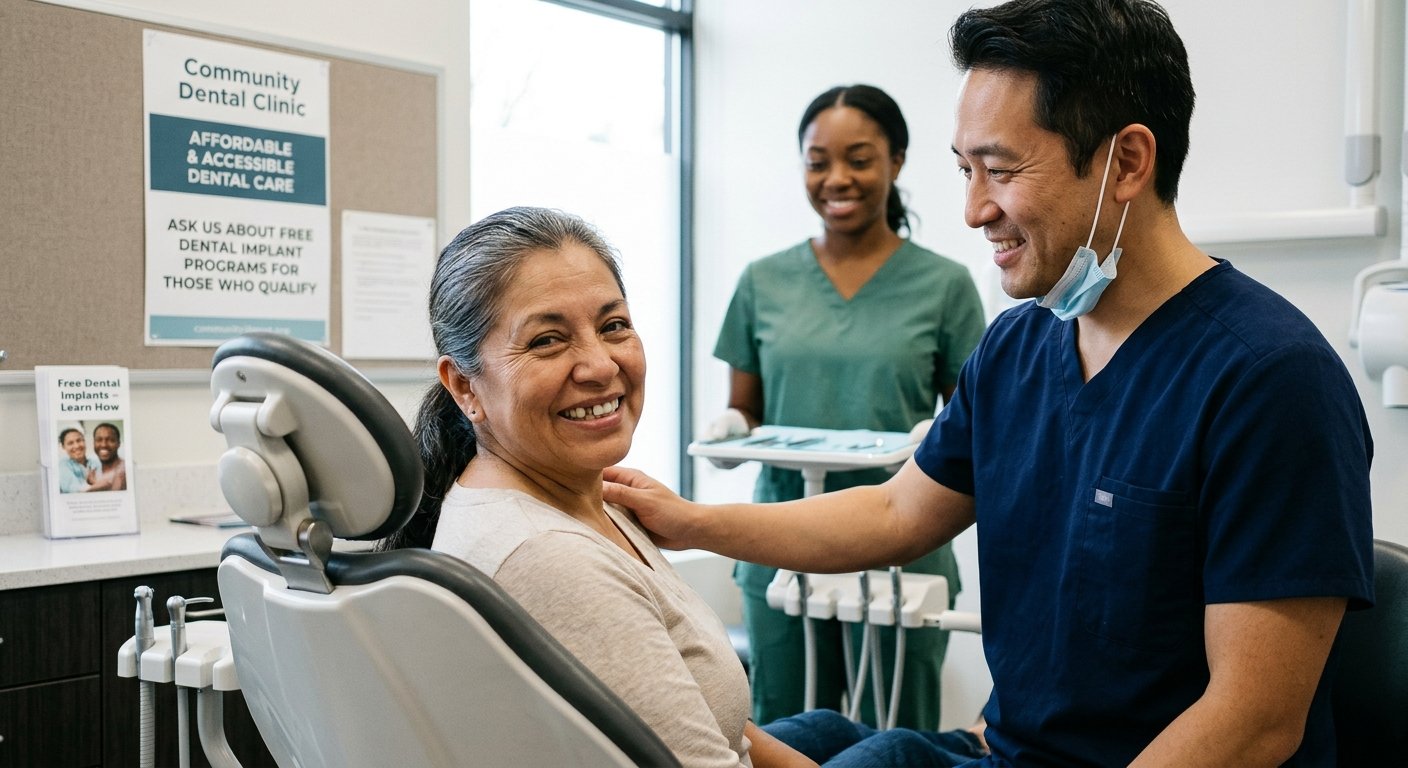
Living with missing teeth impacts how you eat, talk, and feel about your smile every day. While permanent tooth replacement feels out of reach due to steep price tags, thousands of people secure free dental implants every year through legitimate clinical research, nonprofit assistance programs, and specialized healthcare networks.
Getting a complete set of tooth replacements without paying thousands out of pocket requires knowing where to look and meeting specific qualifications. Whether you are a senior on a fixed income, living on a tight budget, or willing to participate in scientific research, multiple avenues exist to rebuild your smile safely.
1. How Free Dental Implants Work in Modern Dentistry
Many patients ask if getting tooth replacements at no cost is real or just a clever marketing gimmick. The short answer is yes—truly free dental implants exist, but they come through charitable programs, dental schools, or clinical trials rather than typical dental insurance.
Organizations partner with volunteer oral surgeons and research institutions to fund these treatments. When you receive no-cost care, the funding comes from research grants, nonprofit foundations, or corporate dental sponsors who cover the cost of titanium posts, abutments, and porcelain crowns.
2. Navigating Free Dental Implants for Low-Income Adults
If your household budget is tight, paying out-of-pocket for oral surgery is rarely an option. Seeking free dental implants for low-income households involves connecting with local community health centers and national assistance networks.
Federally Qualified Health Centers (FQHCs) offer sliding-scale fees based on your income. While they may not always place full implants on-site, they frequently partner with charitable foundations to subsidize complex surgical procedures for qualified local residents.
3. Finding Free Dental Implants Clinical Trials Near Me 2026
One of the fastest pathways to a free restored smile is joining research studies conducted by dental universities and implant manufacturers. Searching for free dental implants clinical trials near me 2026 reveals active studies evaluating new surgical techniques, bone grafting materials, or healing protocols.
In exchange for your time and participation, research teams provide complete surgical placement, high-grade materials, and ongoing monitoring without charging you. Some research centers even provide travel compensation for your visits.
4. Understanding Metal Free Dental Implants and Zirconia Options
If you have metal allergies or prefer a natural-looking aesthetic, traditional titanium posts might not suit your needs. Metal free dental implants, typically made from high-strength ceramic known as zirconia, offer a biocompatible alternative that blends seamlessly with natural teeth.
While ceramic options are often more expensive at private practices, specialized clinical trials and university research departments frequently seek participants specifically for metal-free ceramic study groups.
5. Dedicated Free Dental Implants for Seniors and Older Adults
Loss of natural teeth is common as we age, but fixed retirement budgets make restorative dentistry difficult to afford. Seeking free dental implants for seniors leads many older adults to non-profit networks like the Donated Dental Services (DDS) program.
To qualify for senior-focused charitable care, applicants usually need to be 65 or older, have a clear financial need, or suffer from chronic health conditions that make chewing difficult. Volunteer dentists donate their time, labs, and equipment to restore full oral health for selected applicants.
6. Step-by-Step Guide: How to Get Free Dental Implants Legally
Understanding how to get free dental implants requires systematic research, active outreach, and patience with application procedures.
- Check Eligibility with Charity Networks: Apply through national databases like Dental Lifeline Network to see if you meet low-income or age-based guidelines.
- Search Clinical Registries: Check database resources like ClinicalTrials.gov using keywords like “dental implant” filtered by your geographic area.
- Contact Local Dental Colleges: Reach out directly to university dental clinics in your state to join their waiting list for discounted or trial-funded procedures.
- Gather Proof Documents: Keep pay stubs, tax records, and medical histories ready to streamline your application when openings appear.
7. Locating Free Dental Implants Clinical Trials Near Me
Finding research studies in your geographic region requires searching targeted institutional portals. Major dental institutions regularly post openings for participants who are missing single teeth or require full-arch restorations.
When looking for free dental implants clinical trials near me, contact the clinical research director at nearby universities. Even if a study isn’t actively enrolling today, research departments keep databases of candidates to contact as soon as new study grants are awarded.
8. Financial Assistance and Options for Free Dental Implants for Low-Income Families
For individuals who fall slightly outside charity eligibility guidelines, partial grants and sliding-scale funding offer an effective alternative. Programs like the Cosmetic Dentistry Grants (CDG) provide partial funding that reduces total out-of-pocket expenses by a significant margin.
Combining partial grants with flexible payment plans allows qualifying patients to receive permanent tooth replacements at a fraction of standard retail prices.
9. Avoid Scams: Recognizing Real Assistance vs. Fake Grants
Because demand for affordable oral surgery is high, online scams promising instant government-funded implants are common. The federal government does not hand out direct cash grants to individuals for cosmetic or dental work.
- Red Flags: Websites asking for upfront “application processing fees” or demanding sensitive banking information before reviewing your case.
- Safe Pathways: Legitimate charities, accredited university dental health centers, and verified research institutions never ask for money to submit an application.
10. Preparing for Your Consultation and Treatment Plan
Once you are accepted into a charitable program or clinical trial, your journey begins with a thorough oral assessment. Dentists take 3D X-rays to check jawbone density and ensure your gums are completely healthy before placing any hardware.
If your jawbone has thinned over time, your provider may perform a bone graft first. Following all pre-surgery instructions carefully ensures your new tooth root integrates smoothly with your bone structure for long-term stability.
Frequently Asked Questions
Are dental implants truly 100% free?
Yes, but only through specific charitable programs, university-sponsored research trials, or select foundation grants. Most standard dental offices do not offer free implants without institutional backing.
How do I qualify for low-income dental implant programs?
Qualification typically depends on proof of income, household size, age, or underlying medical necessity. Programs often prioritize disabled individuals, veterans, and low-income seniors.
Are clinical trial dental implants safe?
Yes. Clinical trials are strictly monitored by institutional review boards and licensed dental specialists to ensure patient safety and high care standards throughout the study.
Can Medicare or Medicaid cover the cost of implants?
Standard Medicare does not cover routine dental implants. However, some state Medicaid plans or Medicare Advantage options may cover portion costs if the implants are deemed medically necessary following trauma or illness.
How long are the waiting lists for charitable dental implants?
Depending on your region and the specific program, waiting times can range from a few months to over a year due to high demand and limited volunteer availability.
What happens if I am not eligible for a free implant program?
If you do not qualify for no-cost programs, consider dental school clinics, which offer high-quality care at 30% to 60% lower costs than traditional private practices.
Restoring your smile does not have to mean taking on overwhelming debt. By exploring clinical trials, connecting with senior assistance networks, and applying through accredited university programs, you can find a safe, legitimate pathway toward permanent tooth replacement. Start reaching out to local programs today to take the first step toward regaining your smile and confidence.
